

In a world where architecture often prioritizes function and trends, some places have embraced color as their defining trait and calling card for travelers. These are monochromatic cities, authentic urban canvases where streets, houses, and temples pay tribute to a single hue. The result is urban centers that astonish with visual cohesion, capturing the gaze and imagination of all who visit them.
From the intense yellow of Izamal in Mexico to the celestial blue of Chefchaouen in Morocco, passing through the red of Collonges-la-Rouge and the white and blue of Santorini, these monochromatic destinations are not only photographic spectacles but also invitations to explore the reasons behind their uniqueness. Each city is a universe where color explains everything: faith, history, climate, or simply the will of community. Here we review the six most original monochromatic cities on the planet, according to a selection by National Geographic, true icons where one can get lost in a single color.
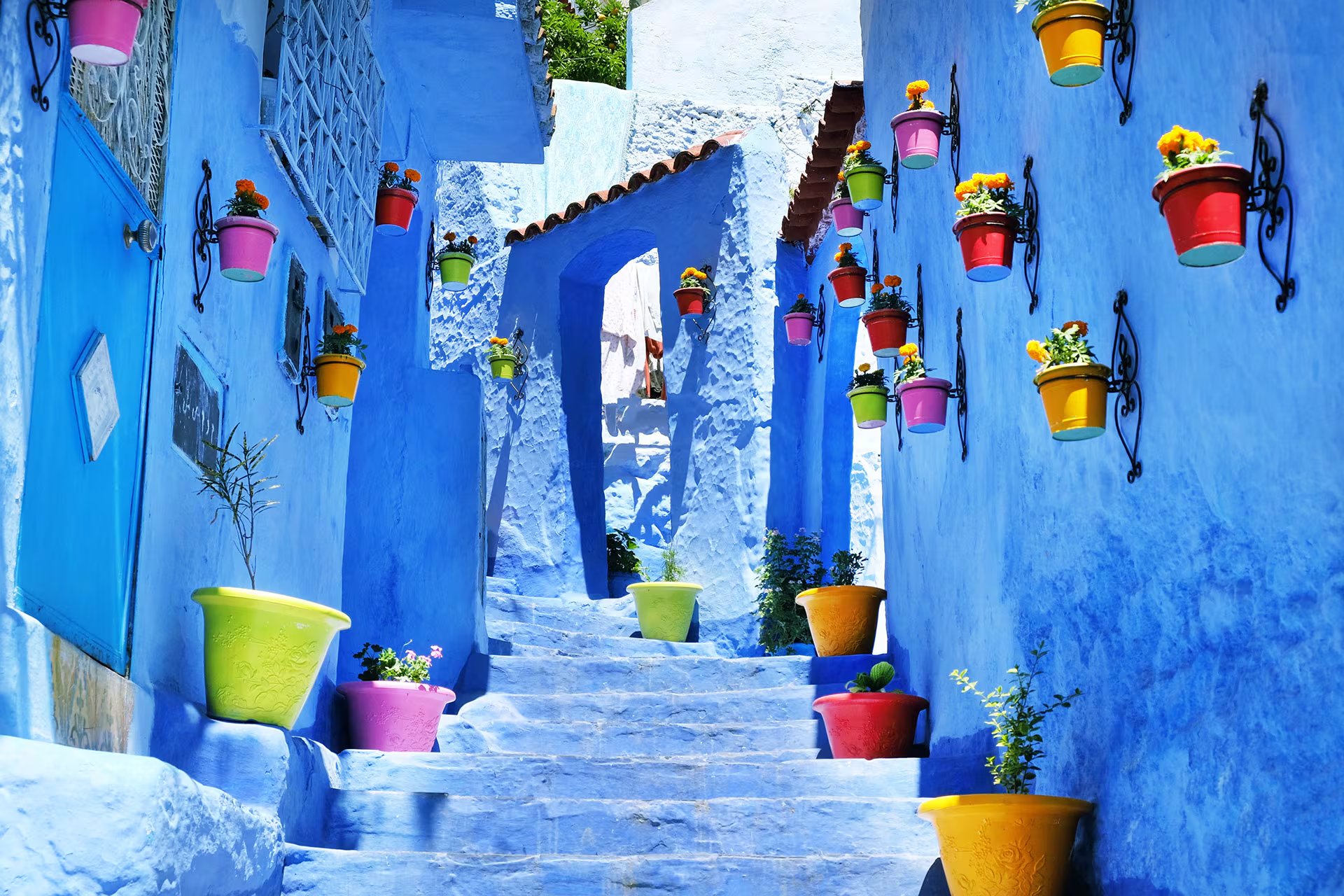
Chefchaouen, Morocco
Nestled at the foot of the Rif Mountains, Chefchaouen is a magical city where blue floods everything. Founded as a refuge after the Reconquista of Al-Andalus, its medina bears an Andalusian imprint and, above all, the mystery of its color: some theories attribute it to Jewish tradition, where blue symbolizes the sky and divine presence; others, to practical reasons such as combating heat or repelling insects. Whatever the reason, Chefchaouen’s blue seduces visitors, who can arrive from Fez or Tangier and get lost in its small, cool streets, especially recommended outside the hottest months.
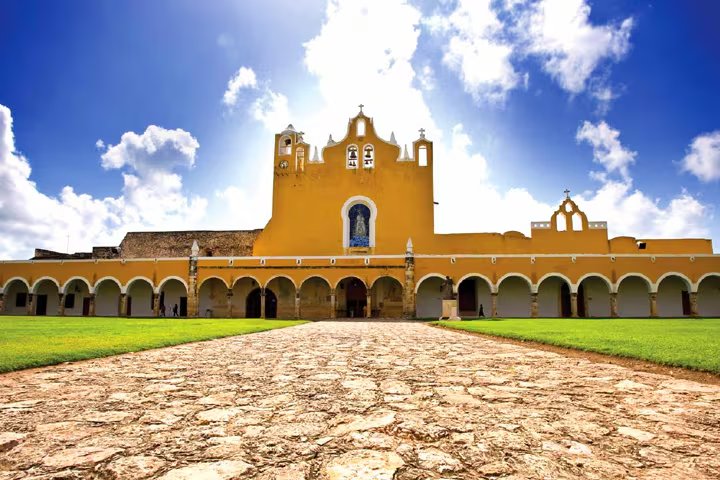
Izamal, Mexico
In the heart of Yucatán, the city of Izamal is a small miracle of architecture and spirituality. It was a sacred Mayan center since pre-Columbian times, and after the arrival of the Spanish, yellow became its hallmark. Although the exact origin of the hue is a mystery —some associate it with the sun and Mayan heritage, others with the 1993 papal visit and Vatican colors—, since 1959 a local ordinance protects this chromatic harmony. Its streets, convents, and squares bathed in yellow offer a tranquil and unique destination, ideal for leisurely exploration and discovering a different Mexico.
Collonges-la-Rouge, France
In southeastern France, Collonges-la-Rouge lives up to its name with reddish sandstone architecture that makes it unmistakable. Founded in the 9th century and linked to the Viscounts of Turenne, this medieval village is now one of the most beautiful villages in France. Its color is a direct result of local geology, and its preservation is so thorough that strolling through Collonges-la-Rouge feels like stepping into an illustrated fairy tale. With no regular public transport except in summer, it is ideal for a car or bicycle excursion.
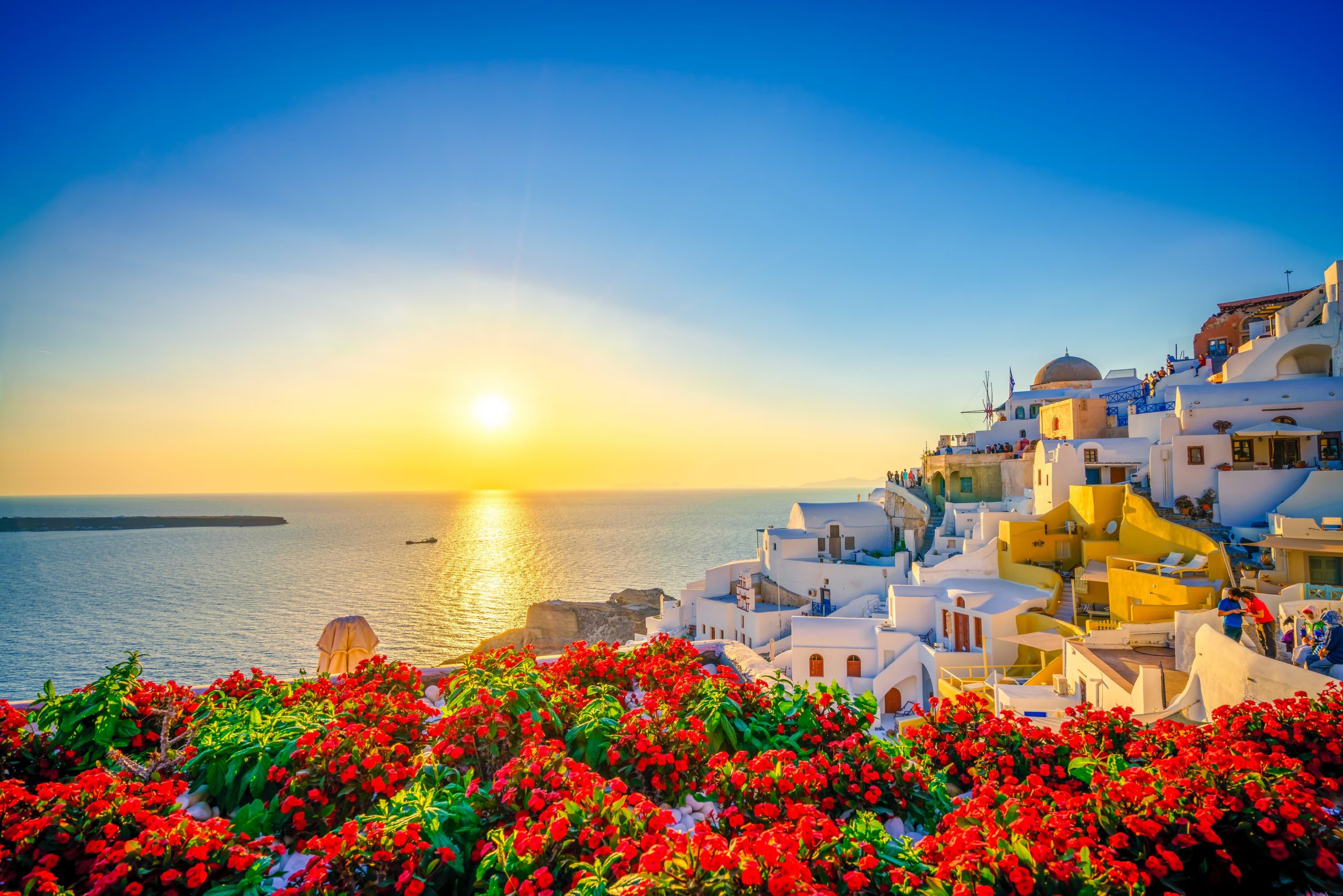
Santorini, Greece
Santorini is arguably the most photographed monochromatic city in the world. The white of its houses and the blue of its domes and details emerged out of necessity after a cholera epidemic in 1938, when all homes were ordered whitewashed with lime. Later, blue came from fishermen, and in the 1970s, the state standardized this palette as a tourist attraction. Today, the contrast of its buildings against the volcanic remnants of the Aegean continues to enchant millions of visitors.
Banwol Island, South Korea
In southwestern South Korea, Banwol Island has gone from being a forgotten place to becoming the “Purple Island.” The Purple Island project, launched in 2015, dyed buildings, bridges, and even boats purple. Lavender and orchid plantations complete the effect. Here, color is a contemporary strategy to attract tourism, without deep historical roots but with a result as photogenic as it is effective. The best time to visit is late spring, when the lavender fields are in bloom.
Roussillon, France
In Provence, Roussillon is a village built on the world’s largest ochre deposit. Its houses, constructed with local earth, display a palette of up to seventeen shades ranging from yellow to intense red. In the 19th century, the village was the global epicenter of the pigment trade, and today it is a destination for color and geology enthusiasts. The Sentier des Ocres is the best way to explore the earthy landscapes and quarries surrounding the village, just 45 minutes from Avignon.
Fuente: Infobae